
This video demonstrates the use of solder wick (braid), a solder sucker (desoldering pump), and desoldering gun. It explains why some joints are hard to desolder: large ground planes or components, small holes, low quality pcbs. Finally, some alternative methods are shown, including cutting the leads, pulling one lead out at a time for resistors and other two-legged parts, and heating all the pins at once, using an iron, hot air or ChipQuik.
Curious Inventor Blog
Just another WordPress site
2013 Guthman Musical Instrument Competition

The 2013 Guthman Musical Instrument Competition featured an array of new instruments that combine electronics, computers and sensors, often building on a base of a traditional acoustic instrument. The $10,000 competition had some prestigious judges this year, including Laurie Anderson, David Wessel, and electronic musician and sound designer Richard Devine.

Onyx Ashanti and his Beatjazz Exo-voice Prosthesis instrument
Continue reading “2013 Guthman Musical Instrument Competition”
Make any USB MIDI Device Wireless with Raspberry Pi
astlab has made a simple device that turns any USB MIDI device into a wireless (WiFi) device that also speaks OSC. They used a USB WiFi dongle to do the transmission. Their target device is aVMeter.

Massive Space Coming to Atlanta for Inventors, Makers, Small Companies

My Inventor Club is moving from a typical hacker-space sized building to a massive new location. The club will offer many of benefits of a hackerspace such as a full machine shop, laser cutters, 3D printers, space to build, etc., but also has enough room to be much more for the Atlanta community. They’re planning on renting space to small hardware-based startups, serving as a co-location workspace, and maybe even holding conferences (mini makerfaires?).
The wooden floor picture looks large enough to comfortably hold 100 makers all working with plenty of elbow room to spare, and they’ve got three floors that size, plus conference rooms. And even more mind-boggling, the 2nd picture shows another “factory” building big enough to hold a cruise ship or small factory. They’re planning on having several car bays for auto work, amongst many other industrial machines. The roof is tall enough to work on some huge art installations (think burning man), and even has a few overhead cranes if anyone needs to move steel beams.
They should be moved in around May. Cost to join is currently $100 per month.


How Microsoft’s Kinect Depth Sensor Works
Many people thought the Kinect’s depth sensor worked using time of flight, but it’s actually much simpler. A cheap infrared camera and projector work together to triangulate distances.
New kit: SMD Soldering Practice Kit
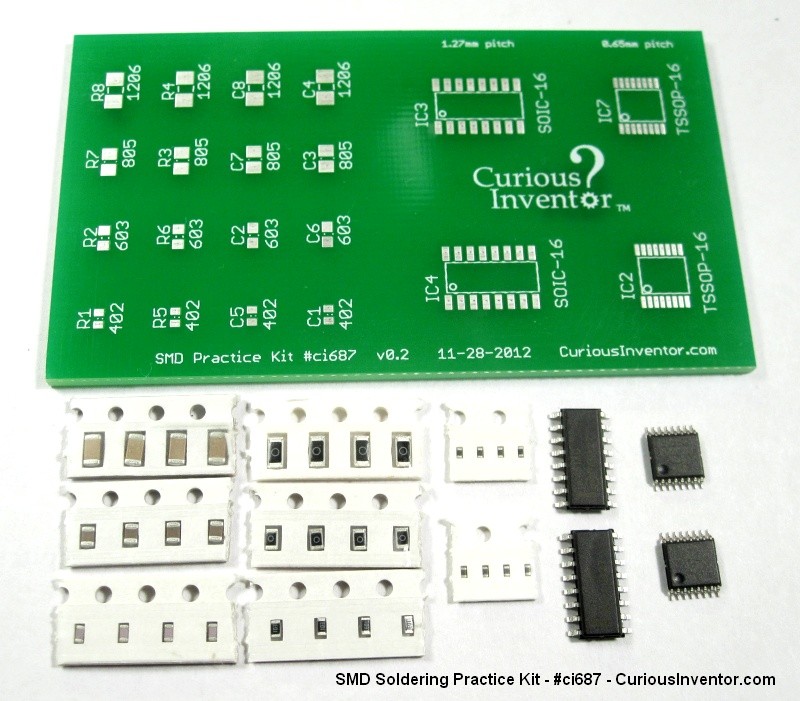
We’ve got a new kit perfect for people looking to learn how to solder SMD parts. The SMD Soldering Practice Kit comes with a range of common parts from big to small, so you can ease your way down to the tinnier components. It also includes 3 pages of full color instructions and illustrations of ideal techniques and finished joints.
New Video: How to Remove SMD Resistors & Capacitors Using a Regular Soldering Iron
Josh creates waterproof LED staircase with 16X PWM LED Fader
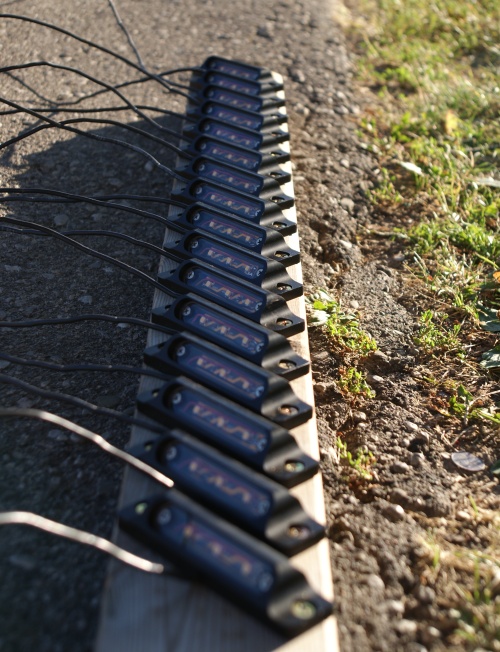
Josh Nijenhuis shared a video of the really cool lighted stairs he made using our 16x PWM LED fader board. https://store.curiousinventor.com/16x-pwm-led-fader.html He made custom machined and anodized 6061 Aluminum LED light holders that are waterproof. The lights will eventually be installed on a real staircase outdoors.

Click Read More to see more pics.
https://img833.imageshack.us/img833/1050/dsc04802z.jpghttps://img96.imageshack.us/img96/5161/dsc04806j.jpghttps://img13.imageshack.us/img13/913/dsc04808pax.jpghttps://img812.imageshack.us/img812/6707/dsc04809lq.jpghttps://img208.imageshack.us/img208/6514/dsc04810d.jpghttps://img526.imageshack.us/img526/944/dsc04811l.jpg
Surface Mount Soldering 101 Workshop at Atlanta Mini Maker Faire
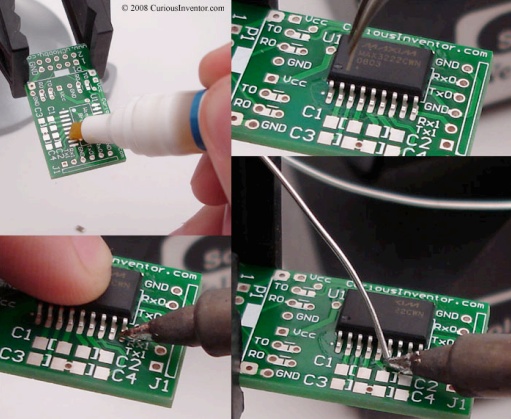


Scott Driscoll will be running a Surface Mount Soldering 101 workshop at the upcoming Atlanta Mini Maker Faire on October 6th.
We’ll cover some basic techniques for soldering surface mount chips with REGULAR IRONS!
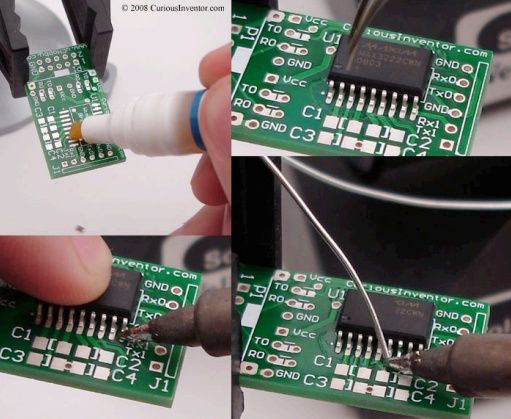
Things you’ll learn
We’ll cover some basic techniques for soldering surface mount chips with REGULAR IRONS!
Things you’ll learn
- Flux makes SMT easy
- Flood and wick method
- How to fix bridges
- All using regular shaped irons–no special micro tips required!
- You’ll be practicing on a small pcb with 1 SOIC and 4 1206 caps (the biggest and easiest SMT parts)
The following advanced techniques will also be demoed
- Solder paste, inexpensive stencils and toaster ovens
- Drag soldering for fine pitch and lots of pins
- Removing SMT chips with hot air and ChipQuik
The cost will be $5 if you’d like parts to solder on, or free if you just want to watch and learn. Please register here (or below) so we can bring enough supplies and schedule multiple sessions if needed.
Also at the Maker Faire: Freeside (Atlanta’s hackerspace) will also be doing a (free!) workshop to make a full fledged robot, and part of it will involve learning through-hole soldering.
SMD Assembly Demo using Home-Made Vacuum, Stencil, Toaster Oven
We talk about solder paste, cheap kapton stencils, how to make a home-made vacuum pick-up tool, and toaster oven reflow temperature profiles.